
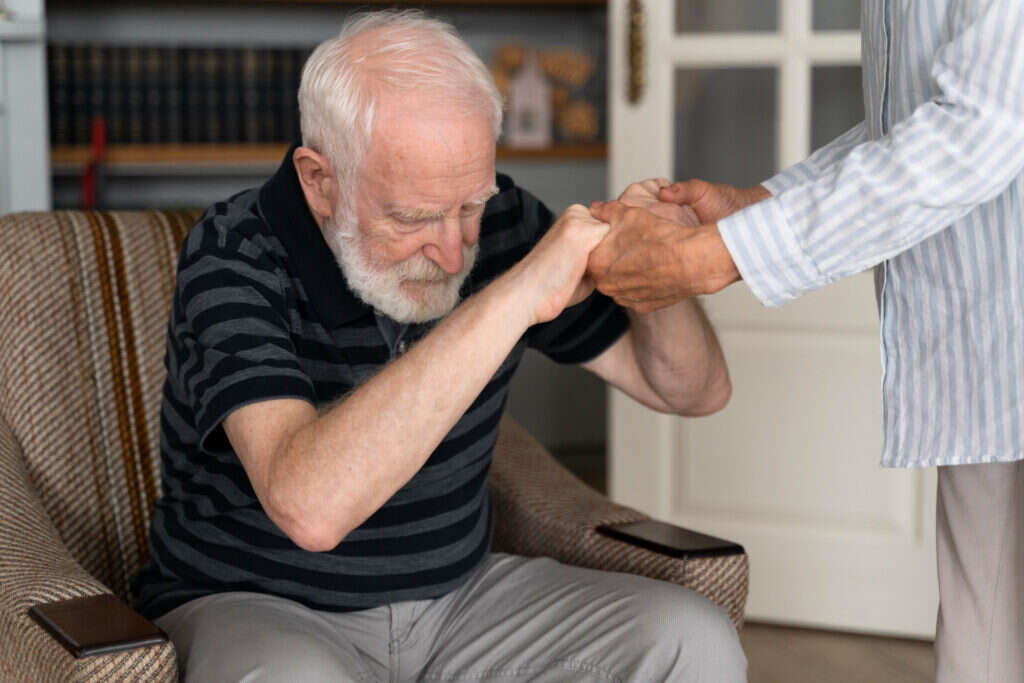
Parkinson’s can affect movement in several ways. A person may notice stiffness, slower movement, smaller steps, changes in posture or difficulty starting, stopping and turning while walking.
Symptoms and priorities differ from one person to another. Physiotherapy does not cure Parkinson’s, but it may help someone maintain movement, fitness and confidence as part of their wider care.
What may a physiotherapist assess?
An assessment may look at walking, balance, posture, strength, flexibility, transfers and daily activities. The physiotherapist will also ask about falls, freezing episodes, fatigue, medication timing and the situations that feel most difficult.
How rehabilitation may help
A personal programme may include:
- practice of larger, more deliberate movements
- strength and flexibility exercises
- balance and turning practice
- getting in and out of a chair or bed
- walking practice using visual or rhythmic cues
- advice about activity and falls prevention
The NHS guidance on Parkinson’s treatment explains that physiotherapy may help make movement easier and improve walking, flexibility and fitness.
Exercise needs to be personal
Exercise should account for current mobility, other health conditions and falls risk. A plan may need to change as symptoms or medication responses change. Someone who is unsteady should be assessed before trying unsupported balance exercises.
When to seek medical advice
Speak to the Parkinson’s team or GP about a sudden change in mobility, repeated falls, new confusion, fainting or difficulty swallowing. Sudden facial or limb weakness, speech difficulty or severe loss of balance needs urgent assessment.
Ask about Parkinson’s rehabilitation
Crestwell Medical can assess movement and build rehabilitation around daily goals. Book an appointment to discuss Parkinson’s or neurological rehabilitation.
This article provides general information and does not replace advice from your neurologist, GP or Parkinson’s team.